
Leather vs. Fabric: Why We Keep Recommending Leather to Customers Who Want a Sofa That Lasts
La-Z-Boy Southeast | May 29, 2026
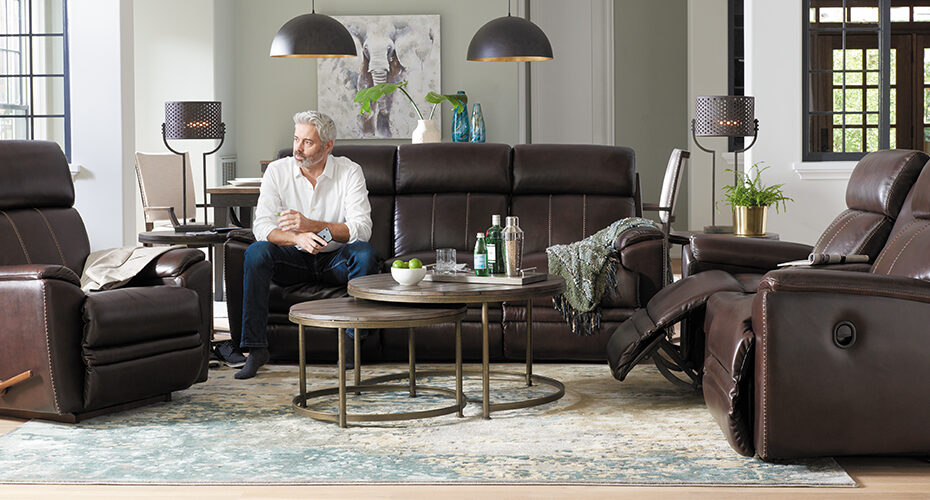
After fifty years of selling sofas and recliners across the Southeast, we’ve watched a lot of furniture come and go from a lot of living rooms. The pieces customers finally — finally — come back to replace decades later? Disproportionately leather.
That’s not nostalgia, and it’s not an accident. When you stack a quality leather piece next to a quality fabric piece on the showroom floor, the differences look subtle. Live with both for ten years, and they’re not subtle at all.
Here’s the head-to-head, the honest version, from people who sell both every day.
1. Lifespan: leather usually wins by a wide margin
This is the most measurable difference. Most furniture industry guides put the practical lifespan of a quality leather sofa at 15 to 25 years, and a quality fabric sofa at 7 to 12 years. Performance fabrics narrow the gap a little, but they don’t close it.
Our own service records tell the same story. The reupholstery, replacement, and “this doesn’t look right anymore” calls we field skew heavily toward fabric pieces. Leather, when it’s the real thing and it’s been cared for, just keeps going.
For a household replacing a sofa every seven or eight years, the long-term math on leather often comes out lower per year than fabric, even though the upfront price is higher.
2. Day-to-day wear: fabric thins, leather softens
This is the contrast that catches most fabric owners off guard. Fabric upholstery wears down — the weave compresses where you sit, the nap flattens on armrests, and the cushion fronts develop the slumped, “lived-in” look that’s hard to undo. Pilling shows up around the seams. Sun-faded patches appear over the years.
Real leather wears in. The hide softens where bodies sit. The contact points develop a faint sheen. Color deepens into a patina. A leather sofa five years in often looks more inviting than the day it arrived. The same five years on a fabric sofa typically read as wear, not character.
3. Comfort year-round: closer than the stereotype suggests
The most common reason customers tell us they’re hesitant about leather is the assumption that it gets hot and sticky in the summer. That impression almost always comes from car seats, which are usually a vinyl-coated material that does not breathe.
Real leather is a natural material with a porous surface. It moves heat the way skin does — it warms up reasonably fast in winter and stays comparatively cool in summer. It also doesn’t hold a chill the way a vinyl-coated car seat does.
Fabric does have a slight edge here on day one, especially looser weaves and linens. But fabric also absorbs spilled drinks, body oils, pet smells, and last night’s takeout, while leather doesn’t. Most customers who were nervous about leather temperature on the showroom stop noticing within a week of living with it.
4. Allergens: leather is the clear winner
This is the reason we hear most often from customers over fifty, and it’s a real one. Fabric upholstery — especially anything with a brushed or napped surface — holds onto dust, pollen, pet dander, and dust mites. Even a thorough vacuuming only gets so much of it back out.
Leather has nowhere for any of that to hide. A weekly wipe-down with a soft cloth is enough to get the surface clean. If anyone in the household has seasonal allergies, pet allergies, or asthma, this single point is often what decides the purchase.
5. Spills and pets: leather is more forgiving
On fabric, a spilled coffee or grape juice means stain remover, a brush, and hoping. On leather, it usually means a damp cloth. Pet claws can pull fabric weaves; they slide across a leather surface without catching the same way. Pet hair brushes off leather instead of working into the fibers. We have a separate article on why leather is great for pets that gets into this in more detail.
The Truth About Care for Your Furniture
Both materials need care. They just need different care.
Fabric needs regular vacuuming — including in the seams and under the cushions — and spot-cleaning treatments when accidents happen. Many fabric pieces eventually need professional upholstery cleaning to look right.
Leather furniture needs an occasional wipe-down with a soft cloth and a leather conditioner once or twice a year. Skip the conditioning and the topcoat can dry out faster than it should.
There’s one piece of honest fine print that the typical “leather furniture is so easy” pitch leaves out: a few everyday things do wear a leather topcoat down faster than people expect. Certain prescription medications — statins, blood pressure, heart, and diabetes medications are the common ones — change the chemistry of body oils enough to break down the finish at headrests and armrests. So can heavy hair products, sunscreen, DEET insect repellent, and any cleaner that wasn’t made for leather. None of that is a dealbreaker; it just means a leather sofa rewards a little routine attention, and a washable throw on the headrest is a smart move for anyone in the at-risk group. Our leather care guide covers all of this in depth.
A quick word on how our leather furniture is built
Most of our leather furniture uses top grain or full grain leather on every seating surface — seats, backs, and arm tops — paired with a color-matched performance material on the sides and backs of the piece. It’s a deliberate choice. You get real leather everywhere your body actually touches the furniture, and a tough, color-matched material on the surfaces that mostly just need to look right and hold up.
If you’d prefer the whole piece wrapped in top grain or full grain leather — sides and backs included — that’s available as a premium build. Your designer or sales associate can walk you through the options.
We do not carry bonded leather. Like much of the industry, we offered it for a stretch years ago; once its durability problems became clear, we stopped. Our bonded leather vs. genuine leather article covers the longer story.
So is leather furniture always the right choice?
Not always. Fabric still wins on day-one softness, on color and pattern variety, and on lower upfront price. If you redecorate every few years or you’re furnishing a starter home, fabric may be the right call. We get into that decision in detail in Fabric vs. Leather: Which One Is Right for You.
But if you’re choosing a piece you want to keep for the long haul — and you’d rather not be sofa-shopping again in eight years — leather is what we’ll quietly steer you toward.
See it in person
The best way to decide is to sit on a few pieces of each. We have locations across NC, SC, and GA, and our free design consultations are the easiest way to see the leather lineup in person. You can also browse the current La-Z-Boy leather collection
More From Furniture Academy
- Bonded Leather vs. Genuine Leather: What 50 Years of Selling Has Taught Us
- Fabric vs. Leather: Which One Is Right for You
- How to Clean and Care for Leather Furniture
- Why Leather Is Great for Pets
- Everything You Need to Know About Leather Recliners