
Everything You Need to Know About Leather Recliners
La-Z-Boy Southeast | June 12, 2026
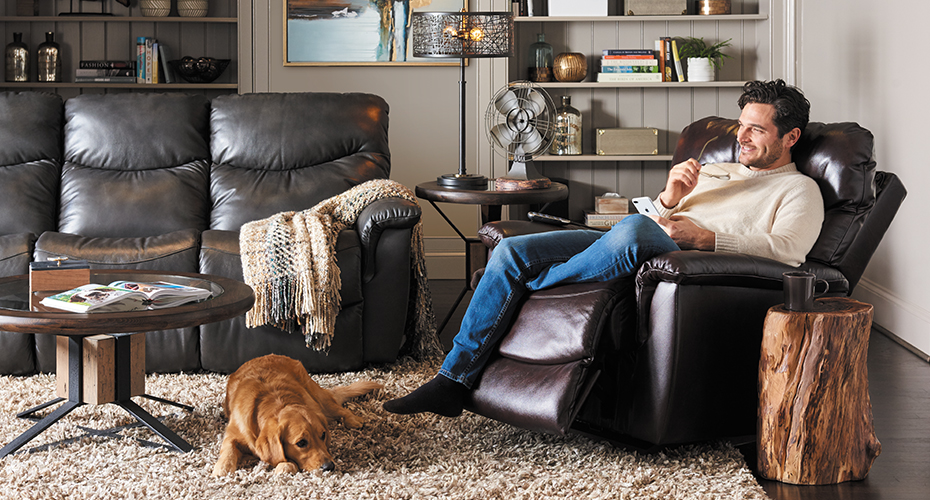
A leather recliner is one of the pieces of furniture customers tend to keep the longest. It’s also one of the pieces where the wrong decision shows up fastest — wrong size for the body, wrong mechanism for the household, wrong material for the use case. There’s more to choosing one than picking a color you like.
This article is the recliner-specific companion to our other leather articles. Whether leather is the right material in the first place, how to clean it, how it compares to fabric, and what we use on sides and backs are all covered in dedicated pieces linked below. Here, we’ll focus on what matters specifically when the piece reclines.
Manual or Power: The Choice That Matters Most
The single biggest decision in buying a recliner is whether the mechanism is manual or power. Both work; they suit different people.
Manual recliners use a side-mounted handle or a pull-tab on the footrest. They’re simpler mechanically, less expensive, and don’t depend on electricity. For households where the recliner gets occasional use — an evening read, the occasional nap — manual is often the right call.
Power recliners use one or more electric motors to extend the footrest and adjust the seat back. They’re noticeably easier to operate, which matters more than people expect over years of daily use. For anyone with reduced mobility, arthritis, or recent surgery — and for anyone who uses the recliner several hours a day — power tends to be worth the additional cost.
A few power upgrades worth understanding before you shop:
- Power headrest — adjusts the head support independently from the seat back. Useful for reading or watching TV without straining the neck.
- Power lumbar — adjusts the small-of-back support. Customers with chronic back issues frequently flag this as the upgrade they’re happiest they made.
- USB charging ports — increasingly standard, sometimes optional.
- Wireless or app-based controls — available on some models.
You don’t have to pick every upgrade. Customers who use the recliner casually often find a basic power recline is plenty. Customers who’ll live in the chair tend to use every adjustment they paid for.
Why the Headrest Wears First on a Leather Recliner
This is the recliner-specific durability point most buyers don’t hear about. On a sofa, body contact spreads across the seat and back; on a recliner, the head spends real time pressed against one concentrated spot. That makes the headrest the place where leather’s topcoat is most likely to show wear over time.
A few specific things accelerate it:
- Prescription medications excreted through the skin — statins, blood pressure, heart, and diabetes medications, plus chemotherapy drugs — change the chemistry of body oils enough to break down a leather finish. The headrest is where they hit hardest because it’s the spot with the longest skin contact.
- Hair products (gels, leave-in conditioners, beard oils, hair serums) transferring from heads to headrests.
- Sunscreen and DEET insect repellent, particularly for anyone who reclines after time outside.
None of this means a leather recliner is fragile. It just means a washable headrest cover — the kind of cloth that used to be standard on every armchair — is a smart move for anyone on the medications above or anyone who uses heavy hair products. Our leather care article covers the full prevention routine.
Stationary, Swivel, or Rocker: Pick the Base That Fits the Room
Leather recliners come on three different bases, and the right one depends on how you’ll use the chair.
- Stationary recliner — the seat reclines, but the base doesn’t move. The most common choice. Best for rooms where the chair faces a single focal point (a TV, a fireplace).
- Swivel recliner — the chair rotates 360 degrees on its base. Good for great rooms, open-plan spaces, or anywhere the user wants to turn from the TV to a conversation without standing up.
- Rocker recliner — the chair rocks gently before being engaged in recline mode. Popular with new parents, anyone who finds rocking soothing, and customers with chronic discomfort.
A wall-saver (sometimes called wall-hugger) design slides the chair forward as it reclines, which means you can place it within an inch or two of the wall. This is worth knowing if your room is tight on space; traditional recliners need 12 to 18 inches of clearance behind them to fully extend.
Fit Matters More Than Most People Realize
A recliner that doesn’t match the user’s body proportions will be uncomfortable no matter what it’s upholstered in.
The dimensions that matter most:
- Seat depth — from the front of the seat cushion to the seat back. Too shallow and you’ll feel perched; too deep and your knees won’t bend at the front edge.
- Seat height — from the floor to the top of the cushion. Affects how easy the chair is to get in and out of.
- Back height — particularly important for taller users; a back that ends at the shoulder blades is uncomfortable for extended reading or TV.
- Footrest length — too short for a tall user means heels hanging off the end.
La-Z-Boy makes recliners in a range of frame sizes for different body types, including options sized for shorter users and taller users. If you’re outside average proportions, ask the sales associate which models in our lineup actually fit. The wrong fit is the most common reason customers don’t love a recliner they otherwise like.
What’s Real Leather on the Recliner, and What Isn’t
On our leather recliners, every seating surface — seat, back, arm tops, headrest — is genuine top grain or full grain leather. The sides and back panels are upholstered in color-matched performance materials, which keeps the cost of a real leather recliner reasonable without compromising the surfaces you actually touch.
If you’d prefer the whole chair wrapped in top grain or full grain leather, that’s available as a premium build. Your sales associate can walk through which models offer it.
We do not carry bonded leather. Our bonded leather vs. genuine leather article covers the full story; the short version is that bonded leather peels and cracks within a few years and doesn’t belong on a recliner you plan to keep.
A Word on Warranties
Leather recliners actually have two warranties worth understanding: the upholstery warranty (covers the leather and stitching) and the mechanism warranty (covers the reclining frame and, on power models, the motors and electronics). Read both before you buy. La-Z-Boy’s mechanism warranty is one of the longest in the industry; that’s not marketing copy, that’s the warranty card.
For pet households, the Paws & Claws Warranty is a separate optional add-on covering claw, tooth, and accident damage for five years. Worth asking about if you have an active animal.
How to Make the Best Choice
The most useful thing you can do is sit in three or four recliners back-to-back, including at least one model outside your initial preference. The differences between manual and power, between frame sizes, and between leather grades become much clearer when you can compare them directly.
We have locations across NC, SC, and GA, and our free design consultations are the easiest way to walk through the lineup with someone who can answer specifics. You can also browse the current La-Z-Boy leather recliner collection online.
Related Reading:
Are La-Z-Boy Recliners Built With Real Leather?
Bonded Leather vs. Genuine Leather
How to Clean and Care for Leather Furniture
How Much Does Leather Furniture Cost?