How Much Does Leather Furniture Actually Cost? What You’re Really Paying For
La-Z-Boy Southeast | June 11, 2026
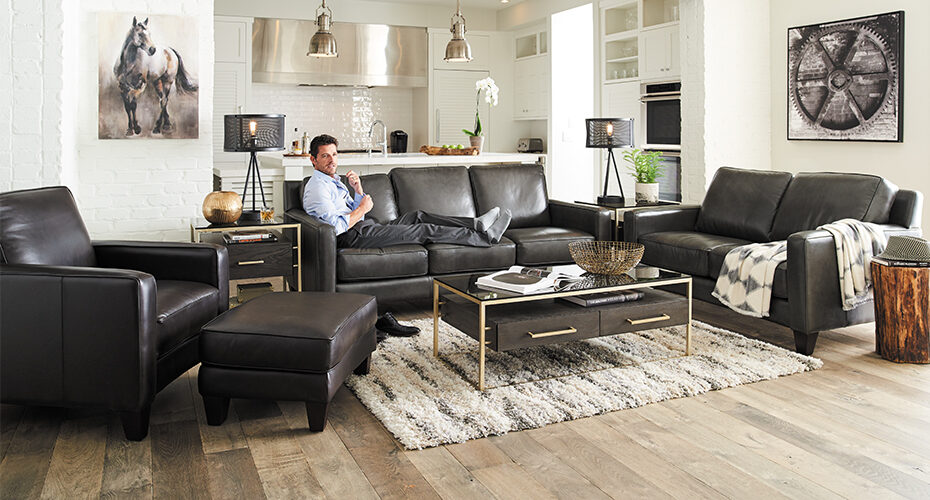
The honest answer to “how much does a leather sofa cost” is unsatisfying: it depends — by a factor of about ten. Two leather sofas can sit next to each other on the same showroom floor with a four-digit gap between their price tags, and both can be entirely fair prices for what they are.
What’s more useful than a single number is understanding what actually moves the price. Once you know that, you can decide which features are worth paying for in your household and which ones aren’t — and any number you see in any showroom will make more sense.
Here are the five things that determine what a leather piece costs.
1. The Grade and Origin of the Leather Itself
The leather is usually the single largest material cost in the piece, and there’s a real spread.
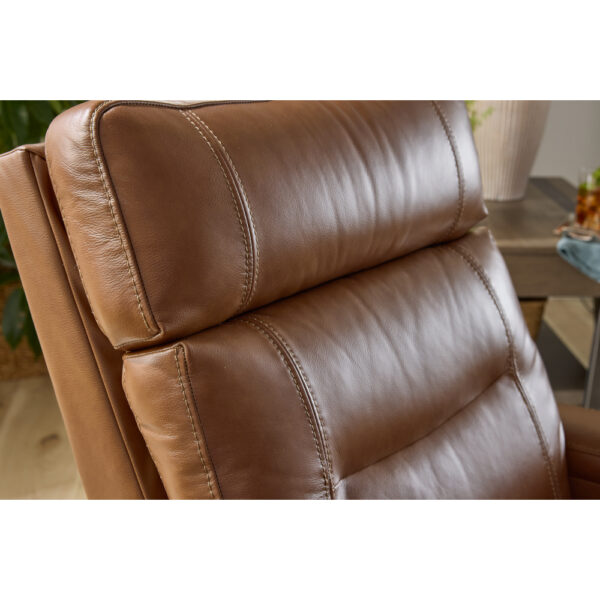
Full grain leather — the entire top layer of the hide with no sanding — is the most expensive of the upholstery leathers and the most durable. Hides with fewer natural blemishes command the highest prices.
Top grain leather — the same top layer, lightly sanded for surface uniformity — is the most common upholstery leather on quality furniture. It’s still real leather, still very durable, and noticeably less expensive than full grain.
The country of origin matters more than people expect. European-tanned hides (Italian especially) tend to cost more than hides finished elsewhere, partly for tanning practices and partly for branding. The actual durability difference is small; the price difference can be significant.
Bonded leather is not in this conversation. It’s a glued-particle product, not a hide-based material, and it costs a fraction of real leather upfront. We do not carry it. If you see “leather” pricing that looks too good to be true, it almost always is. Our bonded leather vs. genuine leather article covers why this matters.
2. The Construction of the Piece
Most of our leather furniture is built with top grain or full grain leather on every seating surface — seats, backs, and arm tops — paired with color-matched performance materials on the sides and backs of the piece. This construction keeps the price of a real leather sofa within reach of more households while still putting genuine leather everywhere your body actually contacts the furniture.
If you’d prefer the entire piece wrapped in top grain or full grain leather — sides and backs included — that’s available as a premium build. It’s a meaningfully larger amount of leather, and the price reflects that. For many customers the standard construction is the right call; for others the all-leather build is worth the upgrade. Either is a legitimate choice.
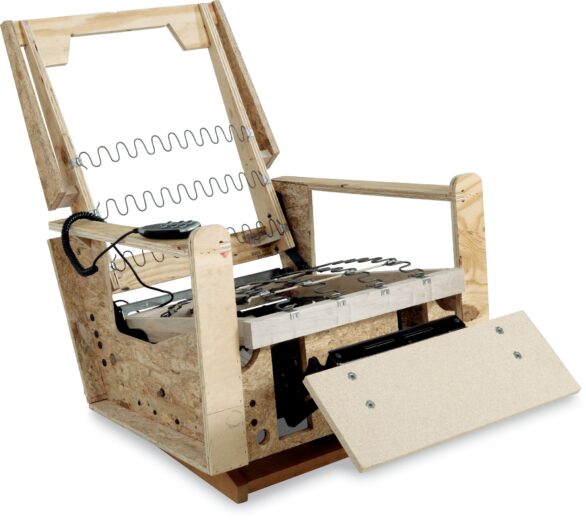
What lives underneath the leather also matters. Hardwood frames, eight-way hand-tied or sinuous-spring seat suspensions, and high-density foam cushions all cost more than particleboard frames, basic springs, and standard foam — and they’re a meaningful part of why a $4,000 sofa lasts twenty years and a $900 sofa doesn’t.
3. The Size and Configuration of the Piece
This is the most obvious driver: more material costs more money.
A leather recliner uses the least leather. A loveseat or apartment sofa uses more. A full-size sofa more again. A sectional, depending on configuration, can use two to four times the leather of a standard sofa.
This isn’t just about hide quantity. Larger pieces also need stronger frames, more substantial cushions, and more labor to assemble.
4. The Mechanism (If It Reclines or Motorizes)
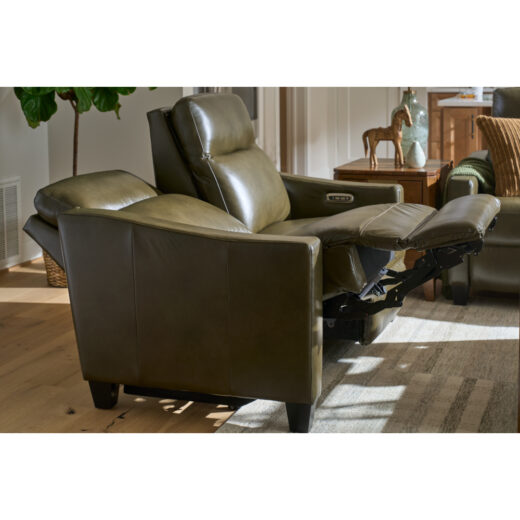
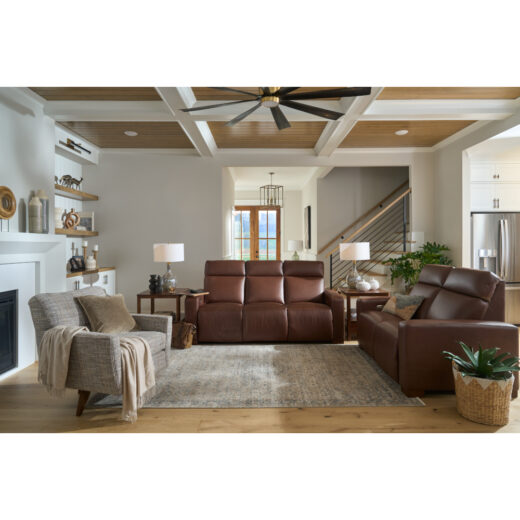
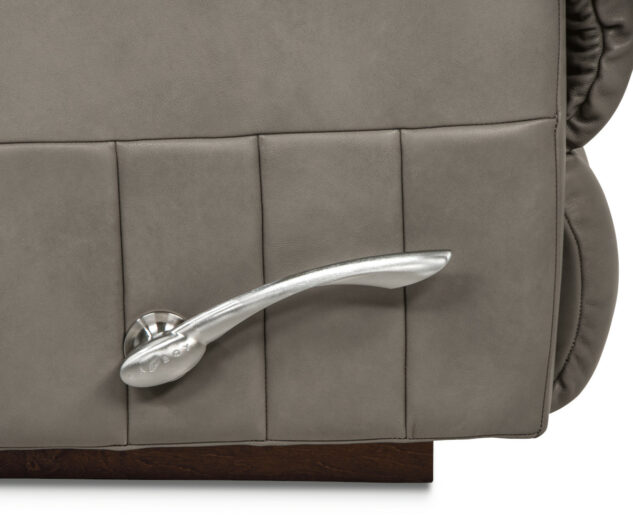
A stationary leather sofa is the simplest version of the piece. Add reclining seats and the price moves up. Add power reclining — motors, wired controls, and the heavier-duty frame to support them — and it moves up again. Power headrests, power lumbar, and USB charging ports each add another increment.
Most La-Z-Boy reclining furniture can be built either manual or power, and the upgrade decision is genuinely personal. Customers with mobility issues, or anyone who already knows they’ll use the recliner daily, tend to find power well worth the cost. Customers who recline occasionally often do fine with manual.
5. The Options and Customization
The base configuration of any leather piece on our floor can be customized in several directions, each of which can move the final price:
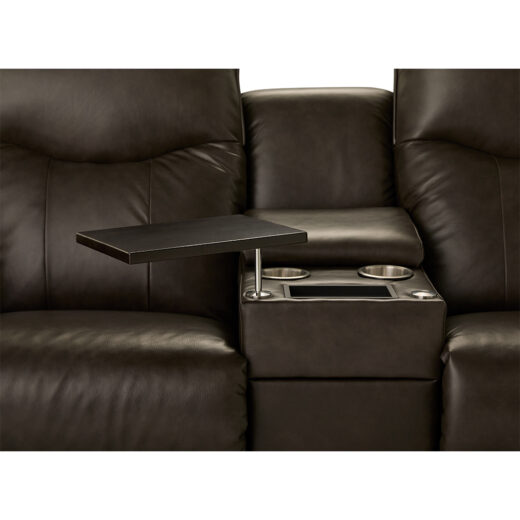
- Leather color and finish. Some color and finish options carry an upcharge; most don’t.
- Contrasting welt, nailhead trim, or contrast stitching.
- Cushion fill upgrades — different foam densities, down or down-blend tops.
- Custom seat heights or depths for taller or shorter household members.
None of these are required, and a piece in its base configuration is already a well-made piece. They’re available because households are different.
So What Does It Actually Cost?
We’re deliberately not putting a single number on this article, because honest pricing is the kind of thing that changes faster than blog posts get updated. Sale pricing, configuration, and dealer-specific promotions all shift the answer.
What we can tell you is the shape of the range: a quality leather recliner is the entry point of the leather lineup; loveseats, sofas, and sectionals scale up from there based on size, mechanism, and the construction choices above. The all-leather premium build typically adds a noticeable upcharge compared to the standard construction. Customization, power upgrades, and premium leathers each add their own increment.
The most accurate answer for your piece comes from sitting on the actual furniture, picking the actual leather, and getting a real quote. Our free design consultations are the easiest way to get one — there’s no obligation, and the consultant will show you what each upgrade actually costs so you can decide which ones matter to you.
That said, here’s a useful piece of orientation. In-stock leather recliners in our showrooms typically run from about $899 to $2,099, depending on the model, the mechanism, and the configuration. That’s a real range for a real leather piece, not a marketing teaser.
For sofas, loveseats, and sectionals — and for any made-to-order leather piece — the price varies too widely to put a single range on. A made-to-order sectional with power reclining, a premium leather, and a few customization choices is a meaningfully different piece from an in-stock loveseat in a standard leather, and the price reflects that. Your designer or sales associate can walk through specifics on the configurations you’re actually considering.
A Useful Comparison Point: Leather vs. Fabric
On average, across comparable pieces in our lineup, leather upholstery runs roughly 30% more than fabric. That’s a real premium, and it’s worth thinking about honestly — but it’s also worth thinking about by the year, not by the day you buy it.
Quality fabric upholstery commonly lasts seven to twelve years. Quality leather upholstery commonly lasts fifteen to twenty-five. For a household that doesn’t want to be sofa-shopping every decade, the cost-per-year math on a 30% premium can actually come out lower than fabric over the life of the piece — especially when you factor in that leather typically still looks right at year twelve, and most fabric doesn’t.
Our leather vs. fabric article goes into that comparison in more detail.
See the Lineup in Person
Pricing always lands more accurately when you’re sitting on the piece you’re considering. We have locations across NC, SC, and GA, and our free design consultations are the simplest way to get a real quote on a specific piece. You can also browse the current La-Z-Boy leather collection online.
Related reading:
- Bonded Leather vs. Genuine Leather
- Leather vs. Fabric: Why We Keep Recommending Leather
- How to Clean and Care for Leather Furniture
- Everything You Need to Know About Leather Recliners