
Does Leather Furniture Make You Hot? The Honest Answer, From People Who Sell It Every Summer
La-Z-Boy Southeast | June 5, 2026
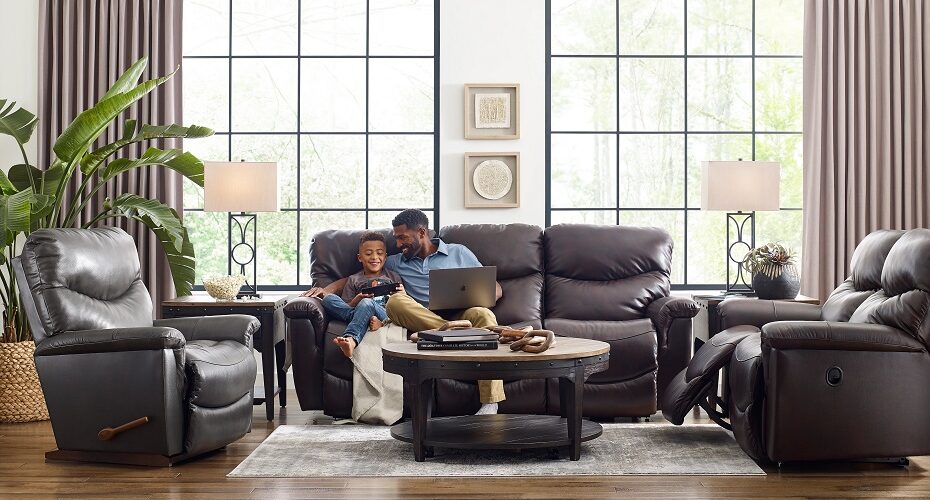
Short answer: no, not in any meaningful way — provided two things are true. The leather is real, and the room isn’t actively cooking it. Past that, real leather in a normal climate-controlled home doesn’t make people hotter than fabric does, and most customers stop noticing the material at all within a week of living with it. So let’s figure this out. Does leather furniture make you hot? The answer is generally no.
Here’s the longer version, because the question almost always comes from somewhere specific.
Where the “leather is hot” reputation comes from
In almost every conversation we have on the showroom floor, when a customer tells us they’re worried about leather being hot or sticky, they’re remembering one of two things: a leather car seat, or a vinyl couch from a decade or two ago. This is often why the question about whether leather furniture makes you hot comes up.
Neither of those is the same material as a quality leather sofa.
Most car seats labeled “leather” are coated in heavy polyurethane finishes or are leather-substitute vinyls. Those finishes don’t breathe at all — they trap heat and sweat against the body, which is exactly the sticky feeling most people remember. Older “vinyl” furniture did the same thing for the same reason.
Real top grain or full grain leather is a different material. It still has the natural porous structure of the hide. It moves heat the way skin does.
How real leather actually behaves with temperature
A few specifics worth knowing:
Leather takes on the temperature of the room. In a 72-degree living room, a leather sofa is roughly 72 degrees. In a sun-baked room, it’ll be warmer. In a cool basement, it’ll feel cooler than the air. It’s not generating heat or refusing to release it — it’s just sitting at whatever temperature the surrounding environment is at. If you’re concerned about leather furniture making you hot, remember it really depends on your environment.
It warms up fast when you sit down. The leather surface picks up your body heat in the first few minutes, and then it stays at that temperature for as long as you’re sitting on it. People sometimes confuse this initial warm-up with the leather “running hot.” It isn’t — it’s reaching equilibrium with you.
It doesn’t absorb sweat the way fabric does. This is the one place leather behaves differently from fabric in a way that can feel less comfortable. If you sit down on a leather sofa already warm and sweating — say, after coming inside from yard work in July — fabric would absorb that moisture and leather won’t. You’ll notice the moisture more on leather, which is occasionally where the “leather makes me sweat” impression comes from. The leather isn’t causing the sweat; it’s just not soaking it up.
It releases heat quickly when you stand up. Unlike vinyl or some heavily synthetic materials, leather doesn’t hold body heat after contact ends. The surface returns to room temperature within a couple of minutes.
The two scenarios where leather can genuinely feel “hot”
There are a couple of honest exceptions worth mentioning.
Direct, sustained sunlight. A leather sofa parked in front of a south- or west-facing window in the late afternoon will absorb solar heat and feel warm to the touch. Sheer curtains or repositioning the piece solves it — and direct sun isn’t great for the leather’s finish in the long run anyway.
A house running hot. If the air conditioning is struggling, the leather is going to feel warm because the room is warm. That’s a room problem, not a leather problem, but it’s worth naming because we sometimes hear it phrased as a complaint about the furniture.
That’s roughly the whole list. Normal indoor temperatures, normal humidity, no direct beating sun — leather is comfortable year-round. In summary, does leather furniture make you hot? For most people in average conditions, it does not.
What we tell customers who are still on the fence
If you’re nervous about temperature on the showroom floor, the most useful thing is to sit on the piece you’re considering for five minutes, not five seconds. The first contact with any upholstery feels different from how the piece settles in. Real leather warms to body temperature and then becomes essentially neutral. If it doesn’t feel sticky after five minutes, it won’t feel sticky in your living room.
A note for buyers in hot, humid climates specifically (which is most of the Southeast in summer): customers in NC, SC, and GA have been sitting on La-Z-Boy leather pieces in our showrooms for fifty years, and we hear the temperature concern far more often before purchase than after.
How our leather pieces are built
Most of our leather furniture uses top grain or full grain leather on every seating surface, with color-matched performance materials on the sides and backs of the piece. The performance materials behave similarly to the leather temperature-wise — neither traps heat the way a coated vinyl would. If you’d prefer the whole piece in top or full grain leather (a more expensive build), that’s available too.
We do not carry bonded leather, which is the material most likely to feel sticky in heat. Our bonded leather vs. genuine leather article covers why.
See it for yourself
The best way to settle a temperature question is to sit on the piece in person, especially during the time of year you’re worried about. We have locations across NC, SC, and GA, and our free design consultations are the easiest way to see the leather lineup. You can also browse the current La-Z-Boy leather collection online. Overall, asking does leather furniture make you hot is common, but in practice, most people find real leather quite comfortable in their homes.
Related reading:
- Leather vs. Fabric: Why We Keep Recommending Leather
- Bonded Leather vs. Genuine Leather
- How Much Does Leather Furniture Cost?
- How to Clean and Care for Leather Furniture