
Corduroy Furniture: What Wales, Nap, and Welting Mean
La-Z-Boy Southeast | October 29, 2026
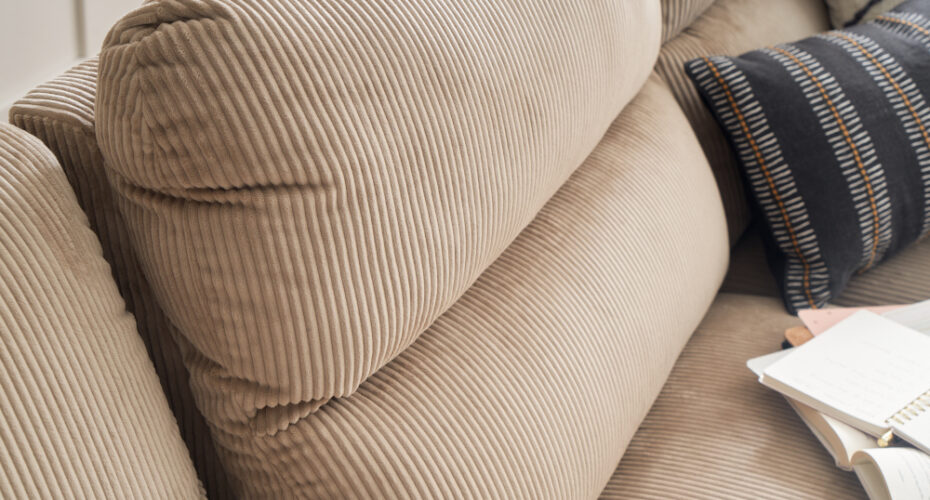
Corduroy upholstery is a soft, cut-pile fabric woven with raised, parallel ribs called wales. The number of wales per inch sets its personality, from relaxed and vintage to crisp and polished. Its pile also leans in one direction, called the nap, so the color shifts as light moves across it. Meanwhile, welting along the seams gives corduroy furniture its tailored edge.
Those three ideas (wales, nap, and welting) explain almost everything you notice when you look at a corduroy chair. In fact, once you know them, you can read a corduroy sofa the way an upholsterer does. If you are still weighing fabric against other covers, our guide to fabric vs. leather furniture is a good place to start.
Those ribs have a name
Each raised rib in corduroy is called a wale. Weavers create them by floating extra yarns across the surface of the cloth. Afterward, those floats are cut and brushed up into soft rows of pile. As a result, corduroy feels plush along each rib and firmer in the narrow channels between them.
The fabric is graded by wale count, which simply means how many ribs fit into one inch. Wide-wale corduroy usually has fewer than eight wales per inch, and some upholstery cords have just four. Standard corduroy lands around ten or eleven. Pinwale and finer cords can run from fourteen to more than twenty.
That number changes the mood of a piece. Fewer, wider wales feel relaxed and a little retro, so they suit a deep lounge chair or a curvy sofa. Because each rib is bold, wide wale also traces the shape of the frame and makes curves more noticeable. Finer wales, on the other hand, read almost like velvet from across the room. That makes them a natural fit for tailored silhouettes, slim arms, and more formal spaces.
You may have heard that the name comes from the French corde du roi, or “cord of the king.” It is a charming story; however, language historians have never found the French using that phrase. The word most likely took shape in England, where a cotton fabric with a similar name already existed.
Why corduroy changes with the light
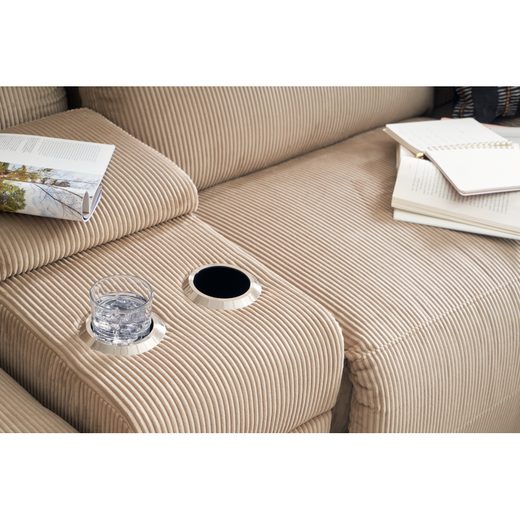
When corduroy is finished, the cut pile gets brushed so the fibers lean in one direction. That lean is the nap. Run your hand along a wale and you will feel it right away. One direction feels smooth, while the other feels slightly rough and resistant.
The nap also affects color. When you look at the fabric with the nap, the fiber tips reflect more light, so the surface looks lighter and a bit shinier. Against the nap, you see deeper into the pile, and the same fabric looks darker and richer. That is why a corduroy sofa can appear two-toned in a photo, even though every panel came off the same bolt.
For this reason, upholsterers cut every panel with the nap running the same way. On most pieces, it runs down the inside back and toward the front edge of the seat. Consequently, the color reads evenly from where you would normally look at it. If one cushion were flipped the wrong way, it would stand out as a slightly different shade.
Over time, you will also notice softer patches where people sit most often. That is the pile bending under pressure, not a flaw in the fabric. In fact, many people love the lived-in character it adds.
The trim that keeps it tailored
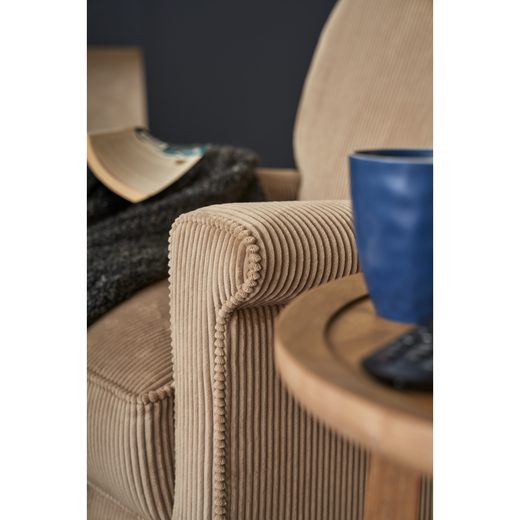
Look closely at the edge of a corduroy cushion or arm, and you will usually find a slim, rounded trim. That trim is welting, sometimes called piping or cording. It starts as a length of cord wrapped in a strip of fabric. Then the upholsterer sews it right into the seam where two panels meet.
Welting does real work beyond looks. It reinforces the seam, so the stitching holds its line under years of use. It also takes the rubbing at edges and corners, which protects the panels around it. Visually, it outlines the shape of the piece, much like a crisp seam on a tailored jacket.
This detail matters even more with corduroy. Because the fabric is so soft and textured, its edges can look a little fuzzy on their own. A clean welt gives the eye a defined line to follow, so the piece looks structured rather than slouchy.
Here is one more thing to look for. Fabric strips for welting are often cut on the bias, meaning diagonally across the weave. That lets the welt bend smoothly around curves without puckering. On corduroy, it also means the ribs wrap around the cord at an angle, which creates a subtle twisted pattern along every edge.
Living with corduroy every day
Corduroy is sturdier than its softness suggests, since the pile is anchored into a tight base weave. That said, fiber content makes a big difference. Classic all-cotton cord feels wonderful, but it can flatten and fade faster at the arms and seat edge. Blends with polyester, along with performance finishes, hold their pile longer and handle spills better. To compare your options side by side, see our breakdown of the most durable furniture fabrics.
If you share your home with pets, corduroy sits somewhere in the middle. Its cut pile has no loops, so claws are less likely to snag it than a nubby bouclé. However, the channels between wales can hold onto pet hair. Our guide to the best furniture for pets walks through those tradeoffs in more detail.
Care is simple once you work with the nap instead of against it. Vacuum with a soft brush attachment, moving in the direction the pile lies. When a spot gets crushed, a little steam held a few inches away can help lift it again. For spills, blot gently rather than scrubbing, which can roughen the pile. Also, keep deep colors out of strong afternoon sun, because pile fabrics show sun fading easily. For performance covers, follow the La-Z-Boy fabric care guidance for that specific pattern.
Seeing corduroy for yourself
Textured fabrics like corduroy never look quite the same on a screen as they do in your room. So if it is on your list, order a swatch and set it where the piece will live. Check it in morning light and again at night. Then turn it in both directions to see the nap shift.
At La-Z-Boy Southeast, our design consultants are happy to pull textured swatches and talk through wale size, fiber content, and welting options with you. Bring a photo of your space, and together you can find the cord, or the alternative, that fits how you live.
Check out these additional resources
- What’s the Most Durable Furniture Fabric?
- Fabric vs. Leather Furniture: Which One is Right for You?
- The Real Guide to Making Your Furniture Last Decades
- Why Your Furniture Fades (And How to Actually Stop It)