
Solid Wood Furniture: Everything You Need To Know
La-Z-Boy Southeast | October 22, 2026

Solid wood furniture is built from whole pieces of natural lumber rather than veneer, particleboard, or MDF. Most quality pieces use hardwoods such as oak, maple, cherry, or walnut, joined with techniques like mortise-and-tenon or dovetail joints. Because it can be sanded, repaired, and refinished, a well-made solid wood piece can last for generations. That said, “solid wood” on a tag doesn’t always mean what shoppers expect. Understanding the material first makes you a much sharper buyer.
Hardwood vs. Softwood Isn’t Really About Hardness
Trees are classified by botany, not by toughness. Hardwoods come from broadleaf trees, like oak, maple, and walnut. Softwoods come from conifers, such as pine, cedar, and spruce. Surprisingly, the names have little to do with how hard the wood is. Balsa, for example, is technically a hardwood, yet it’s light enough for model airplanes.
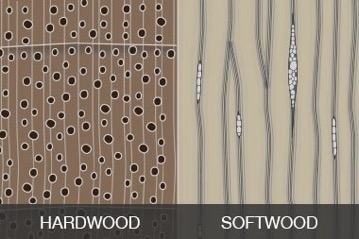
The real difference is inside the wood. Hardwoods move water through open cells called pores, which create the grain patterns you see in oak and ash. Softwoods rely on long, narrow cells called tracheids instead. In practice, the hardwoods used for furniture are usually denser than common softwoods. Oak and maple typically weigh roughly 40 to 50 pounds per cubic foot, while pine often lands in the 20s and low 30s. As a result, hardwood resists dents better and holds screws and joints tightly over time.
Softwoods still have their place, however. In fact, most of the world’s timber is softwood, which goes into home framing, windows, and doors. Pine furniture can be charming and affordable too — it simply dents more easily.
| Wood | Density (lb/ft³) |
|---|---|
| Alder (Hardwood) | 26 – 42 |
| Aspen (Hardwood) | 26 |
| Balsa (Hardwood) | 7 – 9 |
| Beech (Hardwood) | 32 – 56 |
| Cedar (Softwood) | 23 |
| Douglas Fir (Softwood) | 33 |
| Hickory (Hardwood) | 37 – 58 |
| Juniper (Softwood) | 35 |
| Magnolia (Hardwood) | 35 |
| Mahogany (Hardwood) | 31 – 53 |
| Maple (Hardwood) | 39 – 47 |
| Oak (Hardwood) | 37 – 56 |
| Pine (Softwood) | 22 – 35 |
| Poplar (Hardwood) | 22 – 31 |
| Redwood (Softwood) | 28 – 55 |
| Spruce (Softwood) | 25 – 44 |
| Teak (Hardwood) | 41 – 61 |
| Walnut (Hardwood) | 40 – 43 |
| Yew (Softwood) | 42 |
Solid Wood, Veneer, and Engineered Wood
Solid wood means the piece is made from whole boards throughout. Veneer, by contrast, is a thin slice of real wood glued over a core material. Veneer isn’t automatically a shortcut. Fine furniture makers have used it for centuries to create matched grain patterns. Similarly, a quality veneer over a stable plywood core resists warping in wide panels.
Problems arise when particleboard covered in veneer is marketed as solid wood. Particleboard and MDF are made from wood chips or fibers pressed together with resin. They’re inexpensive and smooth, but they can sag under weight and swell if they get wet. They also can’t be sanded and refinished the way solid wood can.
Meanwhile, engineered wood plays a smart supporting role in upholstered furniture. Sofa and recliner frames flex constantly, so La-Z-Boy pairs kiln-dried solid hardwood in high-stress areas with engineered wood where panel stability matters most. You can see how that frame comes together in our guide to how furniture is made.
When you shop, ask exactly which parts are solid wood. Then check drawer sides, back panels, and the underside of tabletops. Those hidden areas often reveal what a piece is really made of.
Why Kiln Drying Matters
Freshly cut lumber is full of water. As it dries, wood shrinks — and if furniture is built before the wood stabilizes, joints loosen and panels crack. That’s why quality makers kiln-dry their lumber, heating it slowly until its moisture level suits the indoor home it’s headed for.
Even after drying, wood keeps responding to humidity. It expands slightly in muggy months and contracts when the heat or air conditioning runs. Well-made pieces are designed for this movement. For example, tabletops are often attached with fasteners that let the wood shift slightly instead of splitting.

How to Recognize Good Joinery
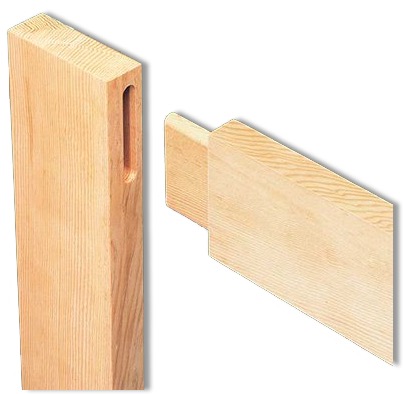
Joinery is how the pieces connect, and it’s one of the clearest signs of quality. A mortise-and-tenon joint fits a tongue of wood, the tenon, into a matching slot, the mortise, then glues it in place. You’ll find it on tables, chairs, and bed frames because it resists twisting. Dovetail joints, meanwhile, interlock fan-shaped pins and tails at drawer corners so the front can’t pull loose. Dowels and corner blocks add reinforcement where stress builds up. On the other hand, joints held together only by staples or a few nails tend to wobble much sooner.
The Natural Character of Solid Wood
Because every board comes from a living tree, no two pieces look exactly alike. Knots form where branches once grew. Grain patterns change depending on how the log was sawn. Color often shifts, too, from lighter sapwood near the bark to darker heartwood at the center. None of these variations weakens the wood. Instead, they’re what make each piece one of a kind. Many species also deepen in color with age and light, and cherry is a well-known example.
The Tradeoffs Worth Knowing
Solid wood isn’t the right fit for every situation. It costs more than engineered alternatives, and large pieces are heavy to move. It also reacts to its surroundings. A table near a heating vent or a sunny window can dry out and fade unevenly. Likewise, standing water can leave marks once a finish wears thin.
Fortunately, most of this damage can be fixed. Scratches can be buffed out, and an entire piece can be sanded and refinished years down the road. That’s something veneer over particleboard rarely allows.
Caring for Solid Wood in a Humid Climate
Southern summers bring plenty of humidity, so a little routine care goes a long way. Keep pieces away from vents and sunny windows. Use coasters and placemats, and wipe spills right away. Dust with a soft, slightly damp cloth rather than silicone sprays, which can build up on the finish. Above all, try to keep indoor humidity steady, because gradual changes are much easier on wood than sudden swings.
Where to Find Solid Wood Furniture
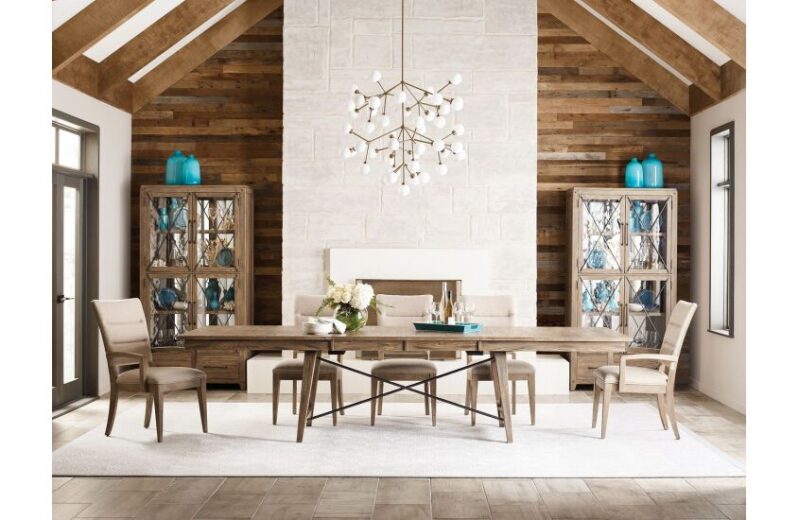
America has a long tradition of furniture makers working in solid hardwood, from Amish workshops in Ohio and Pennsylvania to factories in Virginia. We’ve rounded up seven of them in our guide to where to buy solid wood furniture made in America. In our own showrooms, you’ll also find Kincaid solid wood dining and bedroom furniture. Our team is happy to show you the joinery up close at any of our locations in North Carolina, South Carolina, and Georgia.
Check out these additional resources
- Where To Buy Solid Wood Furniture Made In America
- 5 Benefits of Solid Wood Furniture
- Does Kincaid Make Good Furniture?
- How Is Furniture Made?