
What Is the Rule of Odd Numbers in Design?
La-Z-Boy Southeast | March 6, 2026
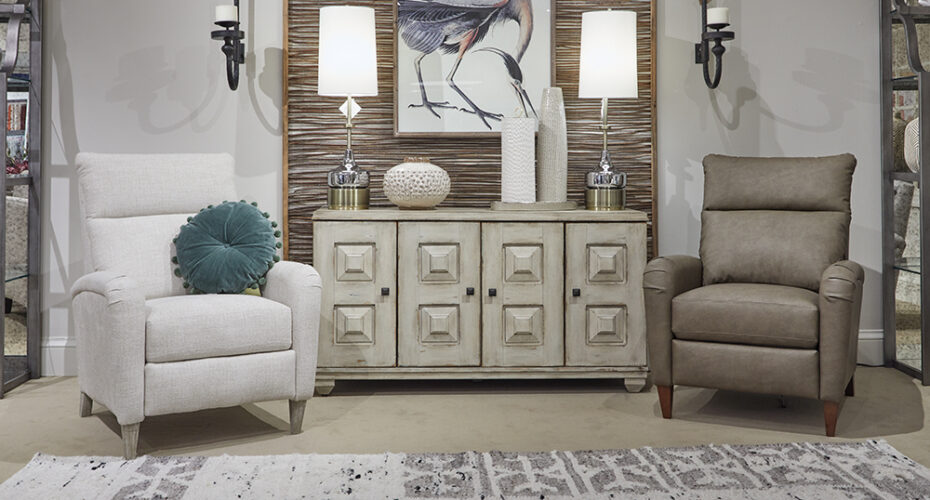
The rule of odd numbers in design is a styling principle that says items grouped in odd numbers — three, five, or seven — look more visually appealing and natural than items arranged in even pairs. Designers use it because odd groupings create a sense of movement and casual balance that feels inviting rather than stiff or overly symmetrical. It applies to everything from throw pillows on a sofa to accessories on a coffee table, and it’s one of the easiest ways to make a room feel more intentionally styled without hiring a professional.
Why Odd Numbers Look Better Than Even
There’s actually some science behind this. Our brains process even groupings quickly and move on — two matching lamps, four identical pillows — because symmetry feels resolved and predictable. Odd numbers, on the other hand, keep the eye engaged a little longer. A group of three objects creates a natural focal point because your eye has somewhere to land (the center item) and then travels outward to the other two. That tiny bit of visual tension is what makes a space feel dynamic instead of flat.
Think about it in nature. Flower petals often grow in odd numbers. Tree branches don’t divide evenly. The most iconic compositions in photography and painting follow the rule of thirds. Odd numbers echo the organic patterns we’re drawn to instinctively, and that’s exactly why they work in your living room too.
How to Use the Rule of Odd Numbers at Home
The beauty of this principle is that it works at every scale, from a single shelf to a whole room layout.
On a Coffee Table or Console
Start with three objects of different heights. A candle, a small plant, and a stack of books is a classic combination, but the key is variation. You want the items to differ in height, shape, and texture so the grouping feels curated rather than matched. A tall vase next to a medium-height sculpture and a small decorative box gives your eye a path to follow from high to low.
With Throw Pillows
Three or five pillows on a sofa tends to look more relaxed and styled than two or four. With three, try two in a coordinating pattern and one solid accent in a contrasting color. With five, you have room to layer textures — something woven, something velvet, something with a subtle print. The odd number keeps the arrangement from looking like a hotel lobby where everything is perfectly mirrored on either side.
If you’re working with a larger piece like a sectional, five pillows can help fill the space without overwhelming it. And if your sofa has a chaise on one end, the asymmetry of the furniture itself practically begs for an odd pillow count to balance the visual weight.
In Gallery Walls and Wall Art
A grouping of three prints or frames tends to feel more intentional than two or four. You can arrange them in a horizontal row, stack them vertically, or create a loose triangle. The odd count gives you a natural centerpiece and prevents the rigid, mirror-image effect that even numbers can produce. For larger gallery walls with seven, nine, or more frames, interior designers often start by placing the center piece first and building outward — still using odd clusters within the larger arrangement.
With Furniture Arrangements
This one surprises people, but the rule of odd numbers applies to larger pieces too. A living room with three seating elements — say a sofa, an accent chair, and a swivel chair — often feels more conversational and layered than one with just a sofa and loveseat facing each other. The third piece breaks the symmetry just enough to create a layout that feels like it evolved naturally rather than being placed by formula.
The same goes for side tables. Instead of matching end tables flanking a sofa, try using two on one side and a different accent table on the other, or skip the second end table entirely and add a small drink table next to an accent chair. Three surfaces in a seating area gives everyone a place to set a glass without the setup looking rigid.
When to Break the Rule
Like any design guideline, the rule of odd numbers is a starting point, not a mandate. There are plenty of situations where even numbers work beautifully. Matching nightstands on either side of a bed create a sense of order that’s exactly right for a bedroom. Dining chairs need to be even for practical reasons. And some spaces genuinely call for symmetry — a formal living room with two identical sofas facing each other can look stunning.
The takeaway isn’t that even numbers are wrong. It’s that if something in your room feels a little off and you can’t pinpoint why, counting your groupings is a surprisingly effective diagnostic tool. Swap a pair of accessories for a trio, add a fifth pillow, or introduce a third piece of art to a wall that has two — and see if that subtle shift brings the balance you were looking for.
Small Changes, Big Impact
The rule of odd numbers is one of those design principles that sounds almost too simple to matter, but once you start noticing it, you’ll see it everywhere — in showrooms, in magazines, in the rooms that just feel right when you walk in. It costs nothing to rearrange what you already own into groups of three or five, and the result is a space that feels more thoughtful, more layered, and more like it was designed on purpose.
If you’re looking for the right accent chair, throw pillow, or accessory to complete that grouping of three, a La-Z-Boy design consultant at any one of our eight locations can help you find pieces that work with what you already have. Sometimes all a room needs is one more thing — and an odd number to tie it all together.
- How Much Does It Cost To Hire an Interior Designer?
- When Is the Best Time to Buy Living Room Furniture?
- 5 Questions to Ask Your Interior Designer